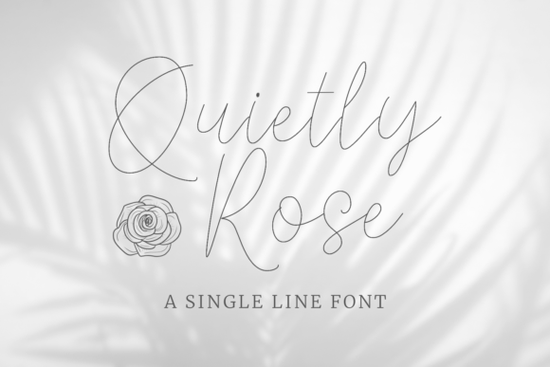
Finding a font that feels elegant without being stuffy, and personal without looking messy, can take hours of scrolling. Quietly Rose Font fills that gap with a refined handwritten style that stays crisp and readable. It’s the kind of lettering you see on high-end invitations, luxury brand packaging, or a boutique’s social media post soft, sophisticated, and clearly crafted with care.
Who is Quietly Rose best suited for?
This font works well for anyone who wants a touch of class but still needs something approachable. Small business owners creating premium product labels, wedding stationery designers, and print‑on‑demand sellers who add text to mugs, tote bags, or apparel will find it especially useful. Creative hobbyists making greeting cards or scrapbook layouts can lean on its graceful lines when a standard cursive font feels too ordinary.
Because it’s a handwritten script, Quietly Rose brings a human quality that geometric sans‑serifs or stiff serifs can’t match. That makes it a strong choice for branding that wants to feel exclusive but not cold. A boutique bakery, a floral studio, or a fine jewelry brand might pair this font with a minimal sans‑serif for a logo that whispers luxury rather than shouting it.
What makes the handwritten style stand out?
Many script fonts try to mimic pen strokes but end up with uneven connections or awkward spacing. Quietly Rose avoids those pitfalls. The letterforms have a consistent slant and weight, so words flow naturally. The ascenders and descenders are long enough to feel airy, but not so exaggerated that they become distracting. Small details like the gentle entry stroke on lowercase letters and slightly flared terminals give it a polished quality that works for both large headlines and small body text on an invitation card.
The font’s sophistication doesn’t come from excessive ornamentation. It relies on clean shapes and subtle contrast. That restraint is why it holds up well across print and digital projects. On a fabric tote, onscreen menu, or foil‑stamped business card, it keeps its character without becoming illegible.
What kind of projects shine with a luxury handwritten font?
The obvious uses are upscale stationery and wedding suites: save‑the‑dates, invitation cards, place cards, menus. But you can stretch that elegant feel into less traditional spaces. Try it on:
- Social media quote posts and Instagram story templates
- Watercolour art prints with inspirational phrases
- Product packaging inserts and thank‑you notes
- Logo design for beauty, wellness, or lifestyle brands
- Blog headers and email newsletter graphics
Think of projects where you want to convey care and attention to detail. A hand‑lettered look automatically suggests that someone took the time to craft the message. That perceived effort can help small businesses build trust and connect with an audience that values quality.
How does Quietly Rose compare to other script fonts?
No single script font works for every project, so it’s helpful to know where Quietly Rose sits among similar choices. If you need something with a bit more bounce and informality, Stitches offers a playful, irregular baseline that’s great for casual crafts. For seasonal projects, Holiday Cookies brings a warm, cheerful feel with slightly rounded letter shapes perfect for holiday cards and packaging. When a lighter, almost weightless touch is needed, Whisper gives you an airy script that suits minimalist wedding stationery. And if your design calls for a modern calligraphy look with varying stroke widths, Love Money adds a bouncy, energetic rhythm.
Quietly Rose sits in a more formal, refined space among these. It’s less casual than Stitches or Holiday Cookies, a touch heavier and more grounded than Whisper, and more consistent in stroke contrast than Love Money. That positioning makes it versatile for both formal and semi‑formal applications. Many designers pair Quietly Rose with a clean sans‑serif like Montserrat or Raleway to balance its ornate character with modern simplicity.
How do you install and use the font?
Quietly Rose comes as a standard .otf or .ttf file, depending on the download option you choose. Once downloaded, you can install it on both Windows and macOS systems just like any font. On Windows, right‑click the font file and select “Install.” On a Mac, double‑click the file and click “Install Font” in Font Book. After installation, the font will appear in your design software’s font menu from Adobe Illustrator and Photoshop to Canva (if you have a Canva Pro subscription that allows custom font uploads).
In most programs, you can adjust spacing and kerning to fine‑tune the look. Because Quietly Rose is a script, turning on automatic ligatures will connect certain letter pairs more smoothly, if the font includes them. Be sure to test a few sample words before finalising your design, especially with longer titles or names where letter spacing might need a slight manual tweak.
What should you check before buying a script font?
Before you commit, open a demo preview if the marketplace offers one. Type out the exact words you plan to use most your brand name, a common invitation phrase, or a product label text. Look for how uppercase letters pair with lowercase, how double letters like “tt” or “ff” connect, and whether numbers and punctuation (ampersands, commas, dashes) match the elegant style. Pay attention to the slant: some script fonts lean so far forward that they become hard to read at small sizes. Quietly Rose keeps a moderate slant that stays legible even on a business card.
Check the licence agreement too. A standard desktop licence usually covers static designs like print or PNG images. If you sell physical products with the font (apparel, mugs, stickers), make sure the licence allows that. For embedded use in e‑books or apps, you’ll likely need an extended licence.
How to get the most from a refined handwritten font
Once you have the font installed, treat it as a focal point. Allow plenty of negative space around text so the letterforms can breathe. Pair it with a matte or subtly textured background rather than a busy pattern. If you’re printing, consider a soft cream or off‑white paper; the contrast with black or dark ink accentuates the delicate strokes. When using it on screen, a light drop shadow or gentle colour gradient can add depth without overwhelming the font’s elegance.
You can also easily mix Quietly Rose with design elements like thin line dividers, watercolour washes, or botanical illustrations. The handwritten style naturally complements organic, handmade‑feeling visuals. This approach keeps the overall design feeling coherent and intentional.
Ready to try it in your own work?
Before you rush to buy, take advantage of the preview tool on the marketplace where you’ll find Quietly Rose. Type a few sample phrases, adjust the size, and see how the font behaves with your specific words. Check how it looks at both large and small sizes, and maybe test it on a mockup that matches your intended surface a t‑shirt, invitation card, or Instagram post. That small step can save you from buying a font that isn’t quite right for your particular project.
Learn More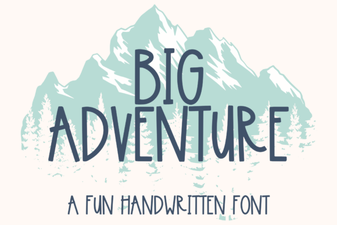 Big Adventure Font: Bold Playful Type for Designs
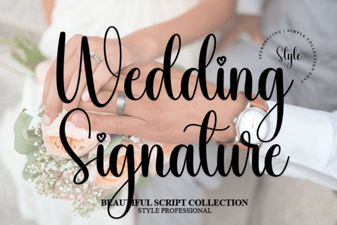 Wedding Signature Fonts for Elegant Invitations and Stationery
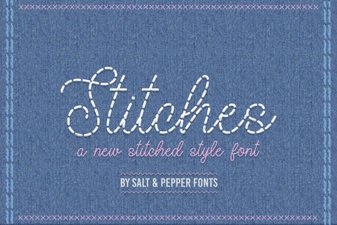 Stitches Font: Craft & Diy Typography Ideas
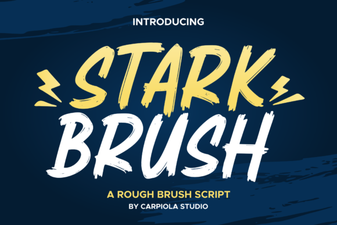 Stark Brush Font: Creative Hand-Lettered Typeface for Design
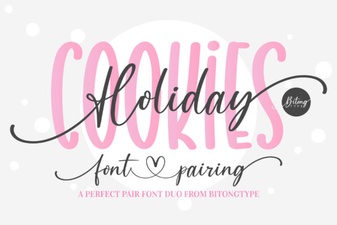 Holiday Cookies Font: Sweet Design Ideas & Usage Tips
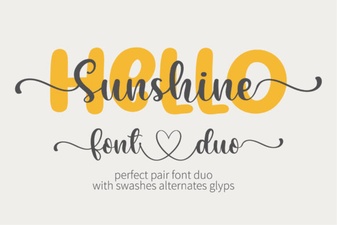 Hello Sunshine Font: Bright Typeface for Creative Work